Pathways
Workflow OS: Enterprise tasking + audit trail for complex operations
- Role - Senior Product Designer
- Team - Designer, multiple engineers, clinical ops SMEs
- Timeline - Shipped + Iterated
- Platform - Web
- Scope - Global Tasking + Action History
At a glance
- Problem: listing not planning; logging not reconstruction
- Solution: planning surface + audit-grade history
- Result: faster triage, clearer workload visibility, faster reviews
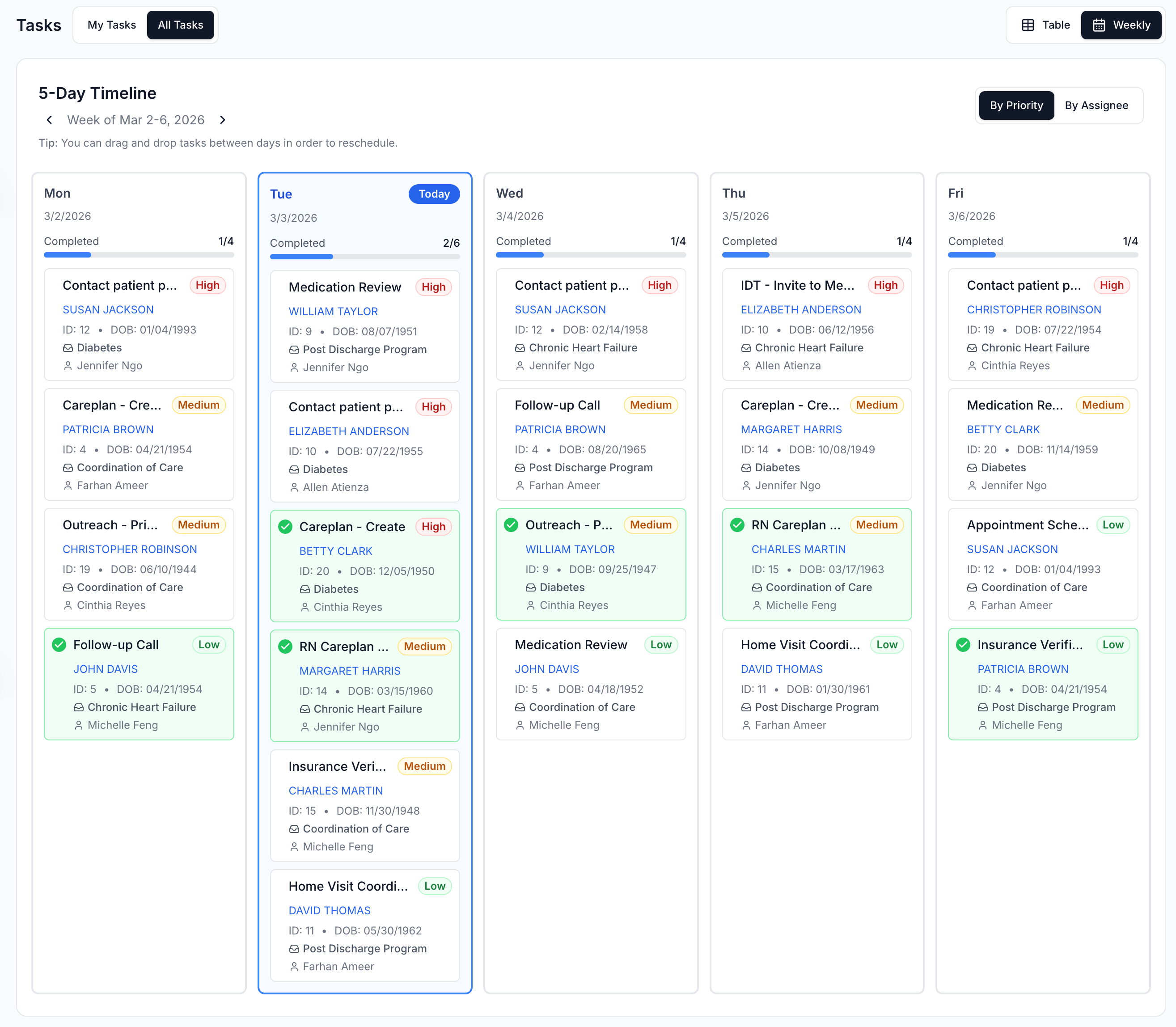
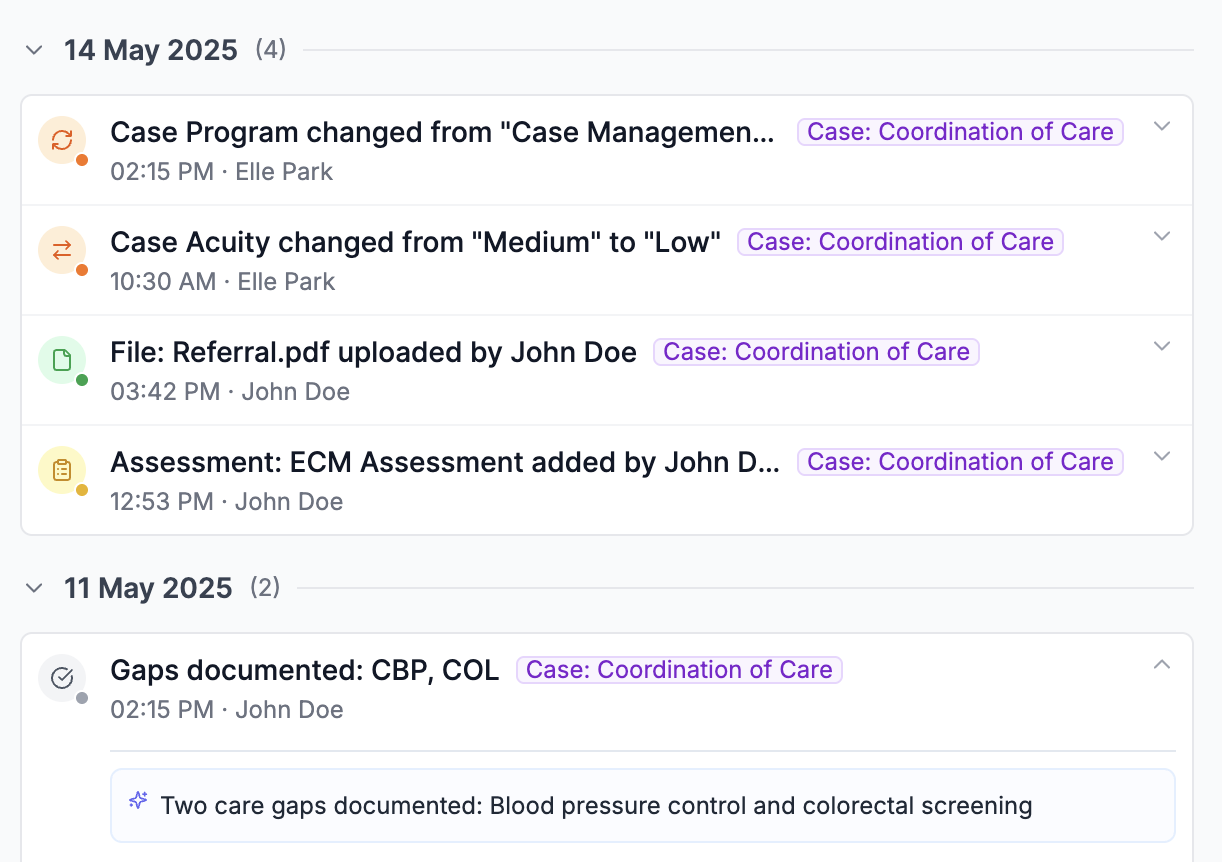
All data shown is synthetic.
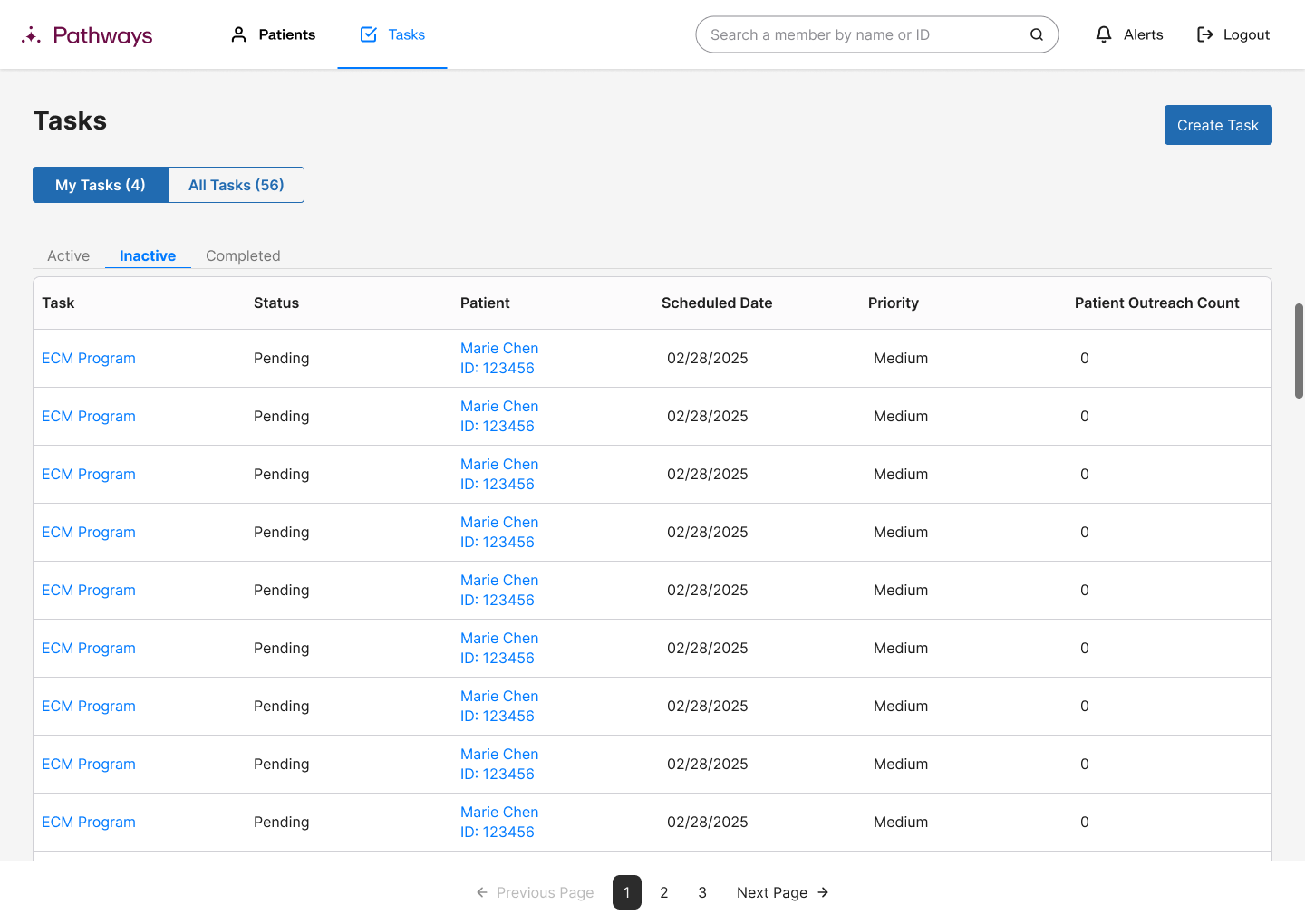
Operations teams were managing high-volume work in a system that supported listing tasks but not planning them, and captured actions but didn’t help people reconstruct what happened. The result was more manual coordination, weaker accountability, and slower reviews. The prior experience was optimized for lookup, not planning.
What success meant
- Faster daily triage for ICs (today/overdue in seconds)
- Workload visibility for leads (distribution + goals)
- Audit-grade traceability for reviews (system vs human, grouped history)
The hard constraints
- High-stakes domain, low tolerance for ambiguity
- High volume: must be skimmable, not verbose
- Multiple roles and mental models (IC vs lead)
- Must work with existing data model and event logging
The Solution
Part A: Global Tasking becomes a planning surface
Key decisions
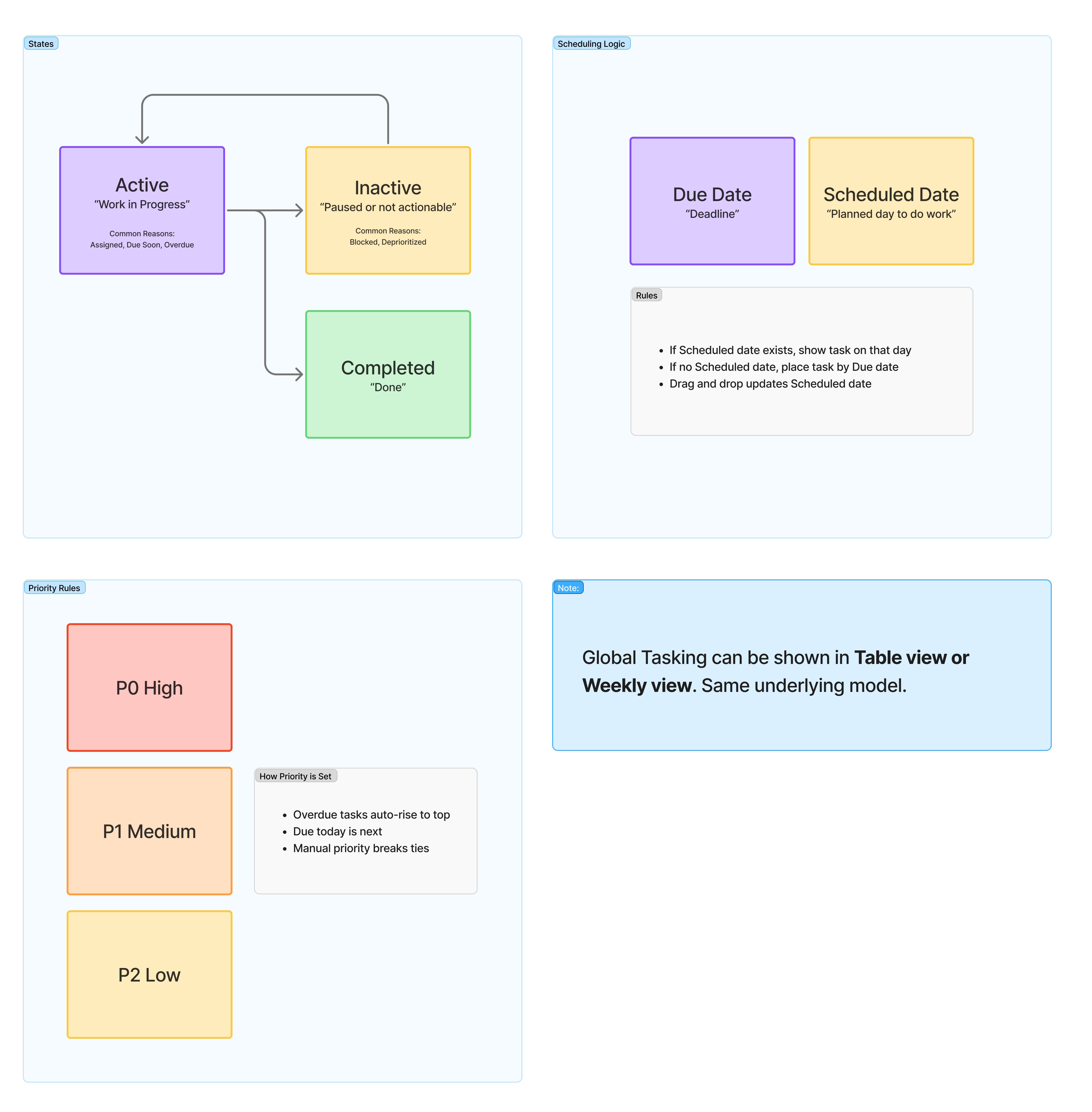
- Kept Table view for power users; added Weekly view for planning (same underlying model)
- Made metrics click-to-filter so the dashboard isn’t decorative
- Designed for two roles (IC triage vs lead oversight) without splitting the product
Before
- No planning horizon
- Weak prioritization signal
- Low visibility into workload and goals
After
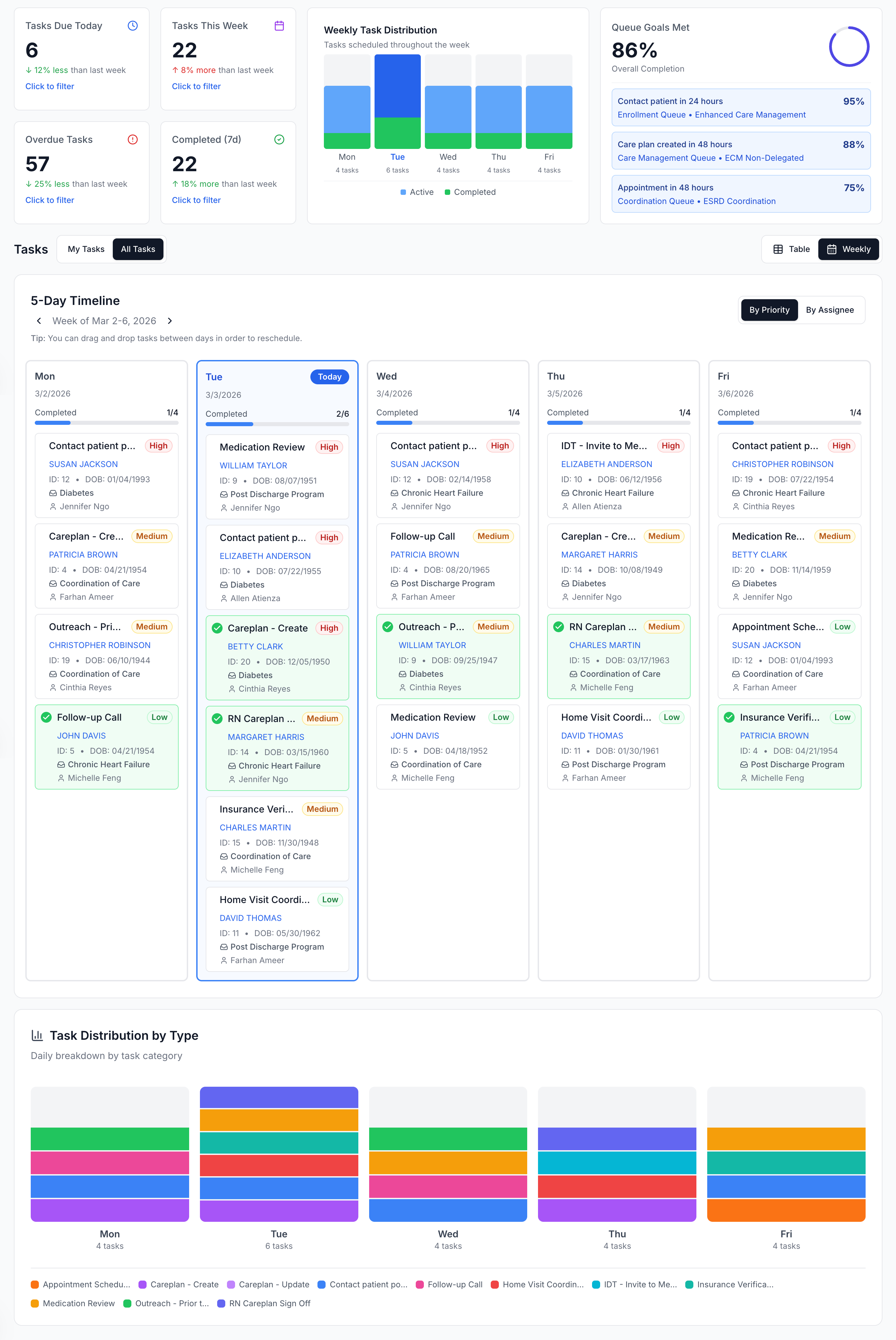
- Introduced triage KPIs (due today, overdue, this week)
- Added week-level planning (distribution)
- Exposed operational performance (queue goals met)
- Enabled rescheduling through a 5-day timeline
- Preserved power-user mode (table view + filters)
Part B: Action History becomes an investigation tool
Edge cases considered:
- Reassignments and ownership changes
- High-volume days (scanability under load)
- Filtering across mixed event types
Before
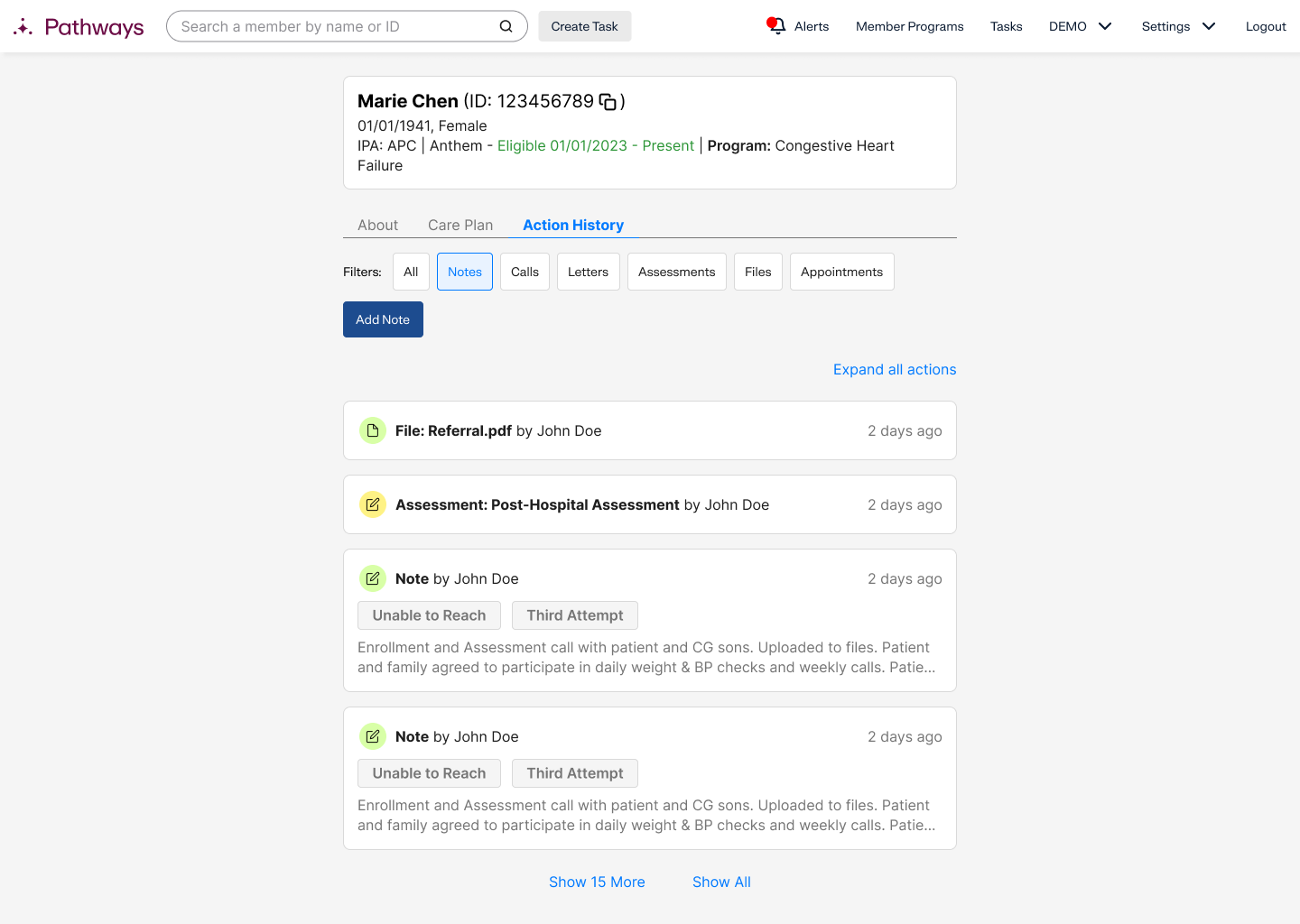
- The feed didn’t support fast scanning during reviews
- Mixed importance levels felt flat
After
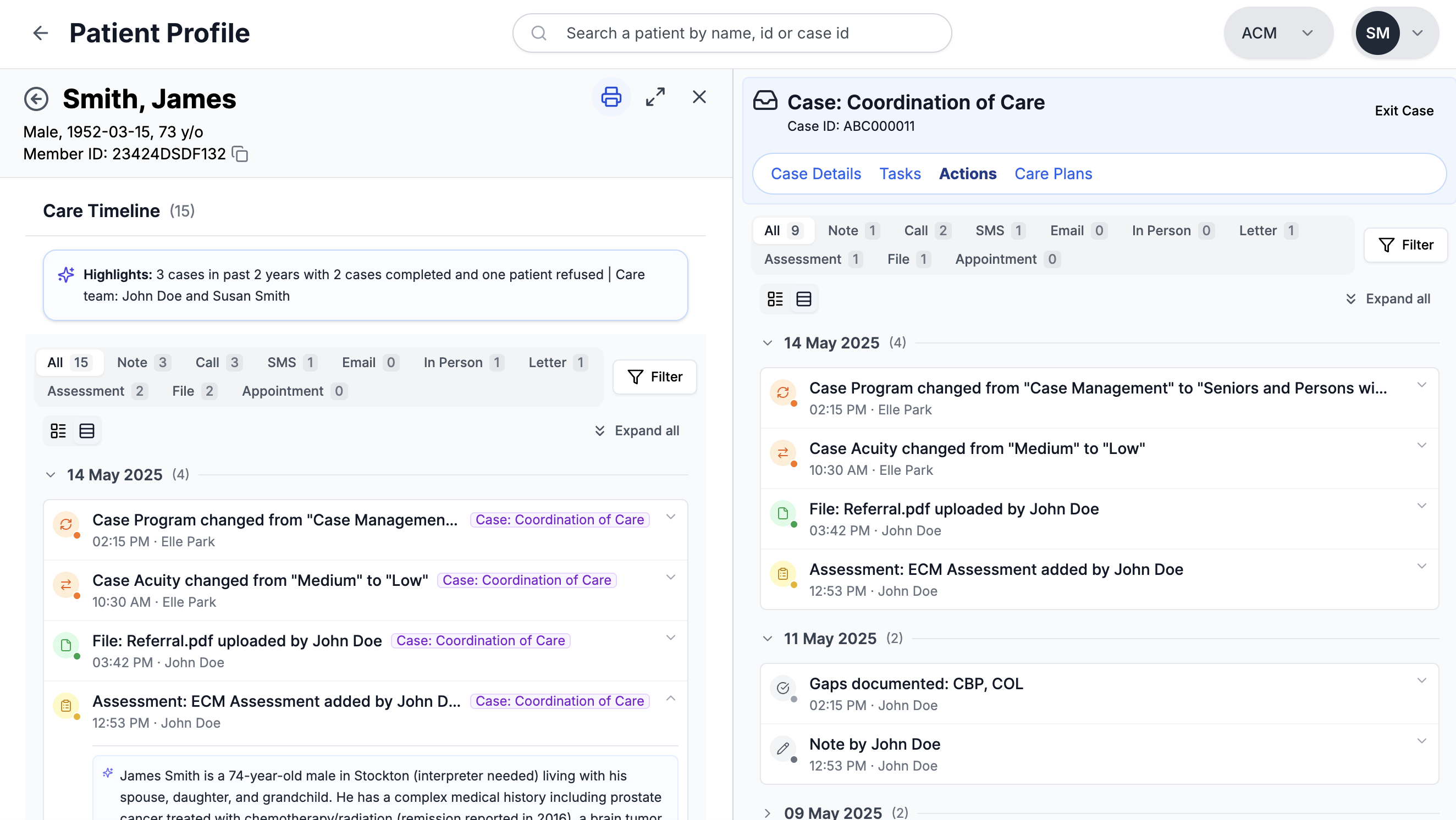
- Grouped entries by day for scanning
- Clarified event typing and hierarchy
- Used expand/collapse for progressive disclosure
- Strengthened filters so reviewers can isolate event types
The Model Behind the UI
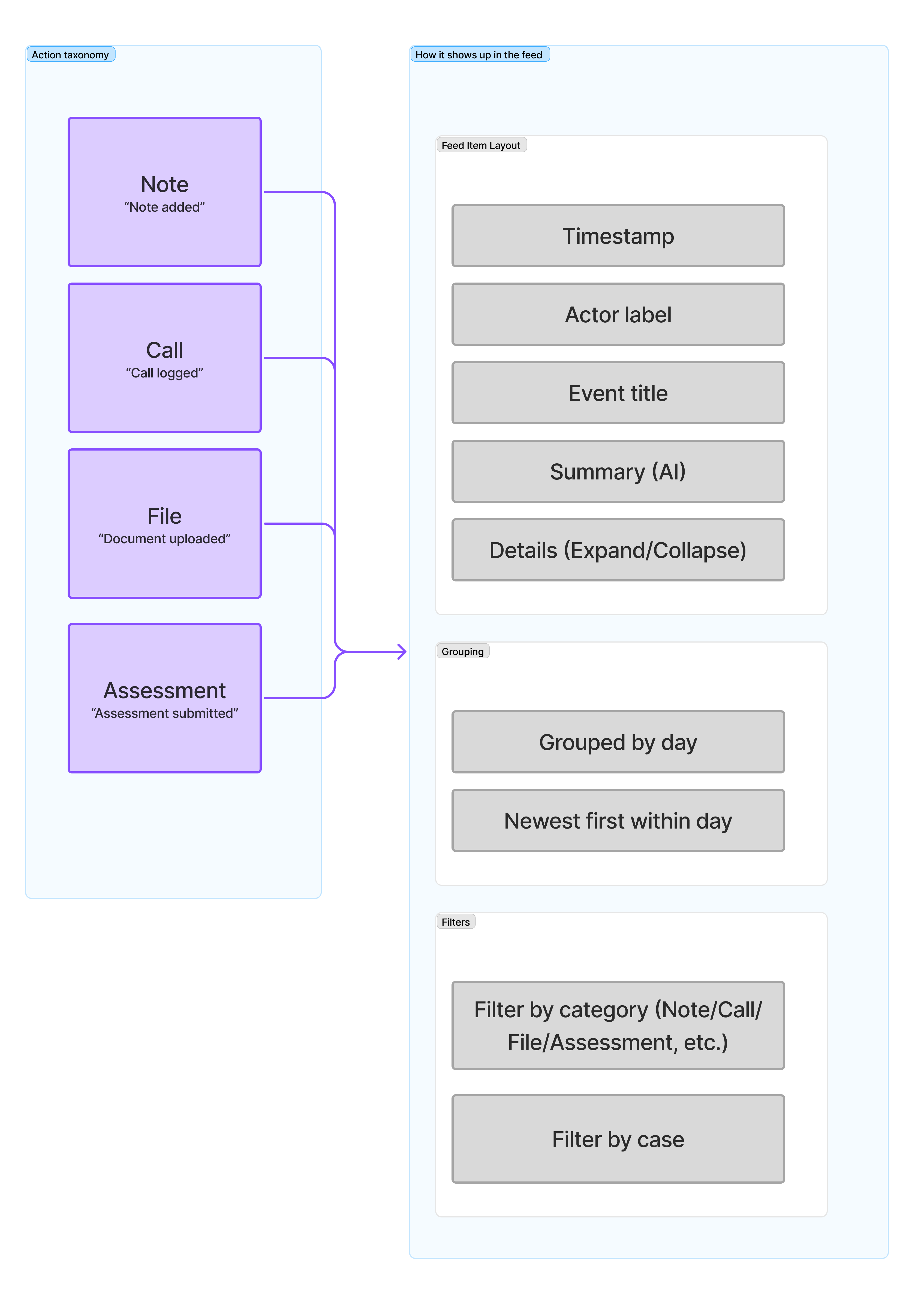
- Designed the taxonomy so reporting and UX used the same truth
- Prevented ‘activity feed spam’ by collapsing detail and grouping by time
- Optimized for reconstruction: a reviewer can answer what changed without asking around
Visual A: Task state + priority model
Visual B: Action taxonomy
Outcomes
- Operational clarity: leads could check goal attainment without manual reporting
- Planning speed: ICs could triage in seconds and plan the week in one surface
- Auditability: reviewers could reconstruct “what changed” without side-channel context
What I owned
- Defined the workflow model (states, priority, scheduling)
- Designed the planning surface (KPIs, distribution, timeline, filters)
- Created an audit-friendly Action History pattern (grouping, typing, progressive disclosure)
- Partnered with engineering on event taxonomy + instrumentation
- Validated edge cases and shipped iterations